A crochet rectangle that slowly turns into a triangle usually has a counting problem, not a yarn problem. Beginners often miss the first stitch at the start of a row or accidentally work twice into the last stitch. You can catch most of these mistakes with a repeatable counting routine.
This guide uses US crochet terms. Turning-chain rules vary by stitch and pattern, so use the instructions for your project as the final authority.
Recognise the top of a stitch
Look along the top edge of a crochet row. Each completed stitch usually forms a small V made from two loops. When a pattern says to work into the next stitch, you normally insert the hook under both loops unless the pattern specifies front loop only, back loop only, or another placement.
Edge stitches can be harder to see because they sit at the turn. That is where stitch markers are especially useful.
How to count stitches in a row
After finishing a row, lay the work flat without stretching it. Starting at one edge, count each V across the top. Do not count the loop sitting on your hook as a completed stitch. Compare your total with the number the pattern says you should have.
For example, if the instructions say to chain 21 and work single crochet into the second chain from the hook and each chain across, you should make 20 single-crochet stitches. Foundation-chain counts and stitch counts are related, but they are not always the same number.
Find the first and last stitch
The first stitch
After turning, the first stitch may sit close to the base of the turning chain. Gently spread the fabric and look for the first clear V at the edge. Place a removable marker through that stitch if you often skip it.
The last stitch
The final stitch can be easy to miss because it may lean sideways. Check the row directly below the hook and find the last full V at the edge. Do not assume the turning chain counts as a stitch unless your pattern explicitly says so.
Use markers as a counting system
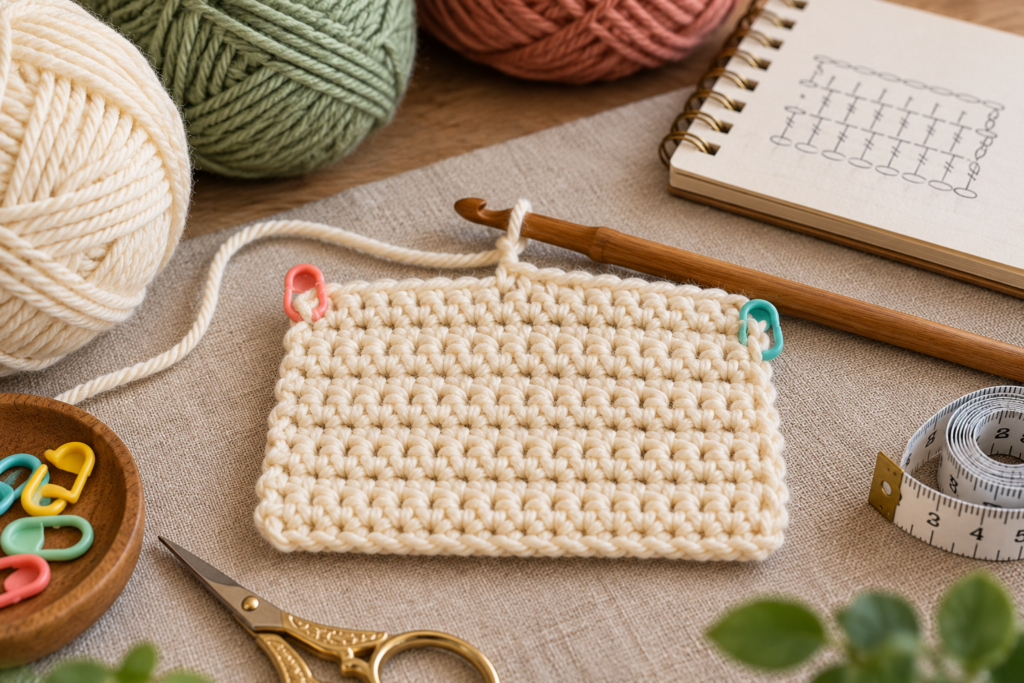
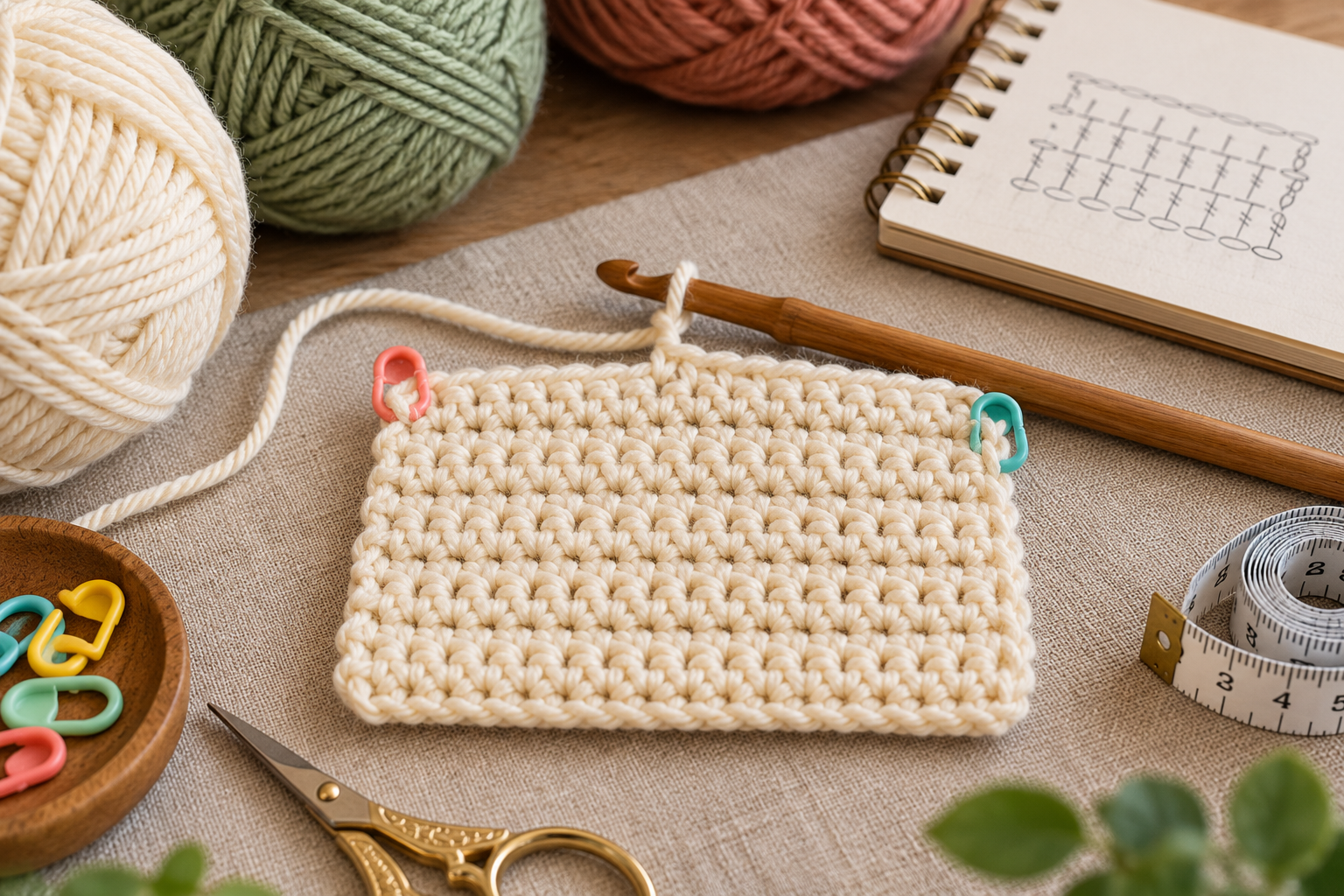
Place one marker in the first stitch and another in the last stitch of a row. At the end of the row, check that you worked into both marked stitches. Move the markers up as you continue. For long rows, add a marker every 10 or 20 stitches to make recounting easier.
Why your edges are getting wider
If each row has more stitches than the pattern calls for, you may be working into the turning chain when it is not meant to count, or accidentally making two stitches in the same edge stitch. Count before turning and check whether the stitch count changes at one particular edge.
Why your edges are getting narrower
If rows gradually shorten, you are probably missing the first or last stitch. Mark both edge stitches and count after every row. If you find a row with one stitch missing, undo to that row and repair it rather than trying to hide the change later.
Fix a mistake without starting over
- Stop when you notice the stitch count is wrong
- Count the current row and compare it with the pattern
- Look first at both edges, where missed or extra stitches are common
- Undo only as far as the mistake, then work the stitches again
- Recount before continuing to the next row
If the fabric is already several rows tall, check the sides for a sudden step or slant. A single missed stitch can be corrected by undoing back to that point. If the stitch count is correct but the edges still look wavy, your tension may be changing; practise with relaxed, consistent movements.
A five-second check at the end of every row
Before turning, ask three questions: Does my stitch count match the pattern? Did I work the first and last stitches? Does the fabric look roughly the same width as the row below? This tiny pause prevents many frustrating repairs.
Frequently asked questions
Do turning chains count as stitches?
Sometimes. It depends on the stitch and the pattern. Many basic single-crochet patterns do not count a turning chain as a stitch, while some taller-stitch patterns do. Follow the pattern notes and use the same rule throughout.
Can blocking fix uneven edges?
Blocking can help even out small differences in tension, depending on the fibre and stitch pattern. It cannot reliably replace missing stitches or remove a major change in stitch count, so correct structural mistakes first.
For more beginner lessons, visit the Crochet Tutorials & Guides and choose a small project from the free crochet pattern library.