You do not need to memorise every crochet stitch before starting a project. A small set of basics can help you make scarves, dishcloths, granny squares, blankets, and the first shapes used in amigurumi. This guide uses US crochet terminology; UK names differ for some stitches.
The 8 stitches and techniques to learn
1. Chain (ch)
The chain creates a foundation for many projects and adds spaces between stitches in lace patterns. Yarn over the hook and pull the yarn through the loop on the hook. Keep the loops even and avoid pulling the chain tight.
2. Slip stitch (sl st)
A slip stitch joins work, closes a round, or moves the yarn across stitches without adding much height. Insert the hook, yarn over, and pull the yarn through both the stitch and the loop on the hook in one movement.
3. Single crochet (sc)
Single crochet makes a short, dense fabric and is common in amigurumi, dishcloths, and sturdy accessories. Insert the hook into the stitch, yarn over and pull up a loop, then yarn over and pull through both loops.
4. Half double crochet (hdc)
Half double crochet is taller than single crochet but shorter than double crochet. Yarn over, insert the hook, pull up a loop, then yarn over and draw through all three loops. It creates flexible fabric for hats and simple blankets.
5. Double crochet (dc)
Double crochet creates more height and a softer drape. Yarn over, insert the hook and pull up a loop, yarn over and draw through two loops, then yarn over and draw through the remaining two loops. It appears in granny squares, shawls, and textured patterns.
6. Treble crochet (tr)
Treble crochet is taller and creates open fabric. In US terms, yarn over twice before inserting the hook. Pull up a loop, then draw through two loops at a time three times. Practise a small sample before using it in a project.
7. Increase (inc)
An increase adds stitches to a row or round, often by working two stitches into one stitch. In amigurumi, evenly spaced increases help a flat circle grow. Follow the pattern’s stitch counts so the shape develops as intended.
8. Decrease (dec)
A decrease combines stitches to reduce the stitch count. It can shape shoulders, narrow a hat, or close the top of a stuffed toy. Many amigurumi patterns use an invisible single-crochet decrease to reduce visible gaps.
How to practise without getting overwhelmed
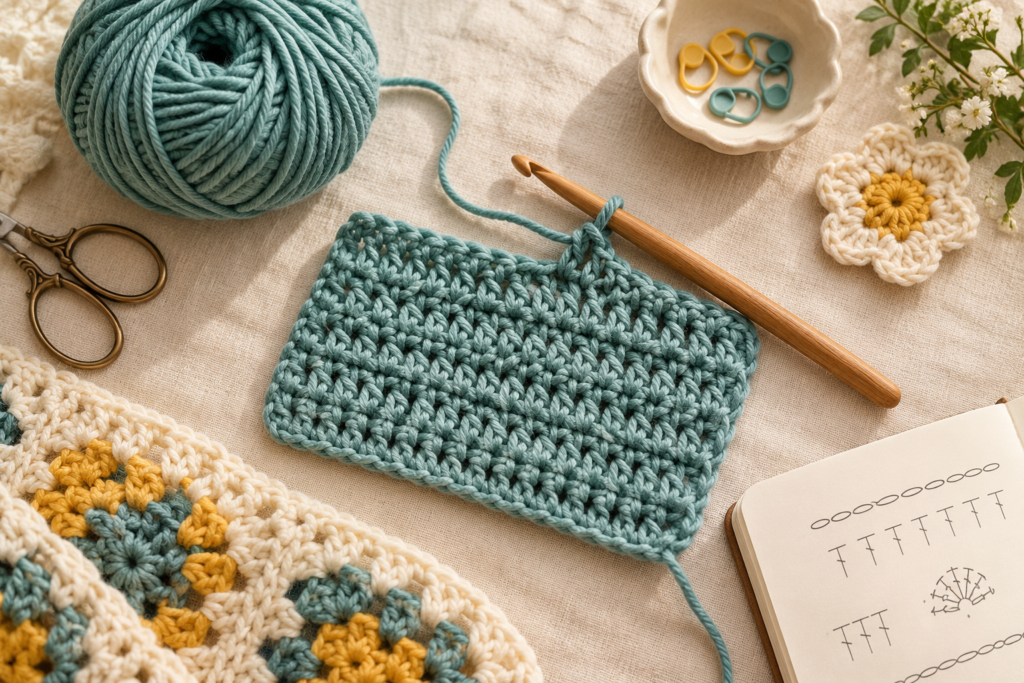
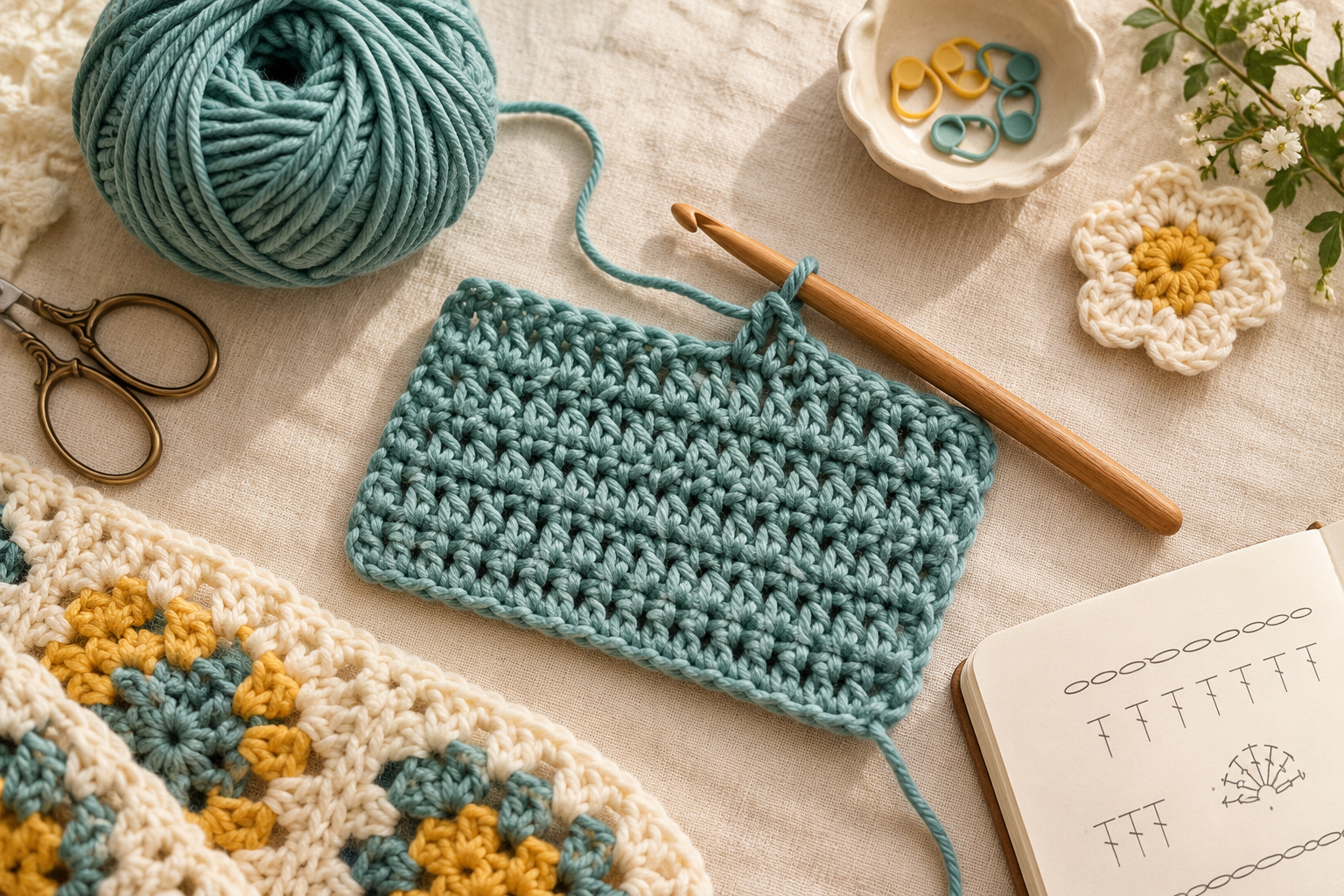
Make one small swatch rather than switching between several patterns. Start with a chain of about 20 stitches, then work several rows of single crochet. Make another swatch with half double crochet and a third with double crochet. Label each sample with the stitch name and hook size so you can compare the fabric.
- Count stitches at the end of every row while you are learning
- Use smooth, light-coloured yarn so stitch tops are visible
- Keep the same hook and yarn when comparing stitch samples
- Undo mistakes as soon as you notice them instead of crocheting past them
US and UK stitch names are not identical
One common source of confusion is the word double. A US single crochet is called a double crochet in UK terminology, and taller stitches shift too. Before beginning a pattern, look for a note that says whether it uses US or UK terms. If the pattern does not say, check the designer’s abbreviation list rather than guessing.
Quick reference
Short and dense: single crochet. Medium height: half double crochet. Taller and drapier: double crochet. Joining: slip stitch. Shaping wider: increase. Shaping narrower: decrease.
What to learn next
Once the basic stitches feel comfortable, practise reading written instructions and counting rows. Then choose a small project that repeats a stitch you already know. Visit the Crochet Tutorials & Guides and explore the free pattern library to put your skills to use.
Frequently asked questions
Which stitch should a beginner learn first?
Start with the chain and single crochet. Together, they teach the basic yarn movement and help you practise keeping edges even.
Do I need to know all eight before starting a pattern?
No. Choose a beginner pattern that uses only stitches you know, and learn any new stitch when the instructions first introduce it.