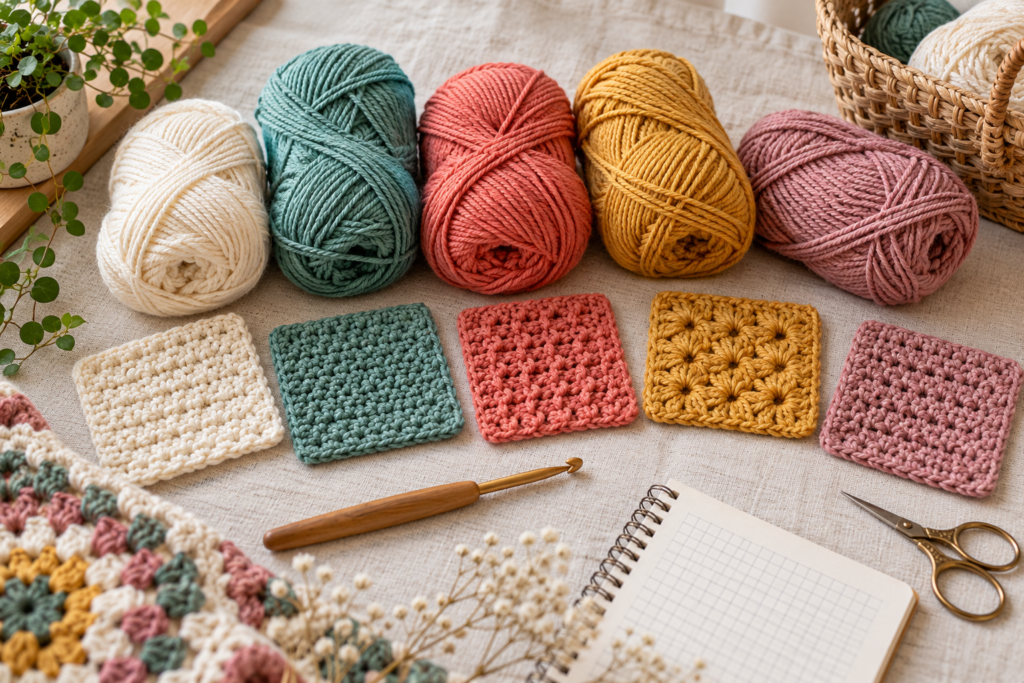
The yarn aisle can feel overwhelming when every ball has a different texture, thickness, and label. Instead of choosing by colour alone, start with the project you want to make. A soft blanket, sturdy market bag, cotton coaster, and small stuffed toy need different qualities from their yarn.
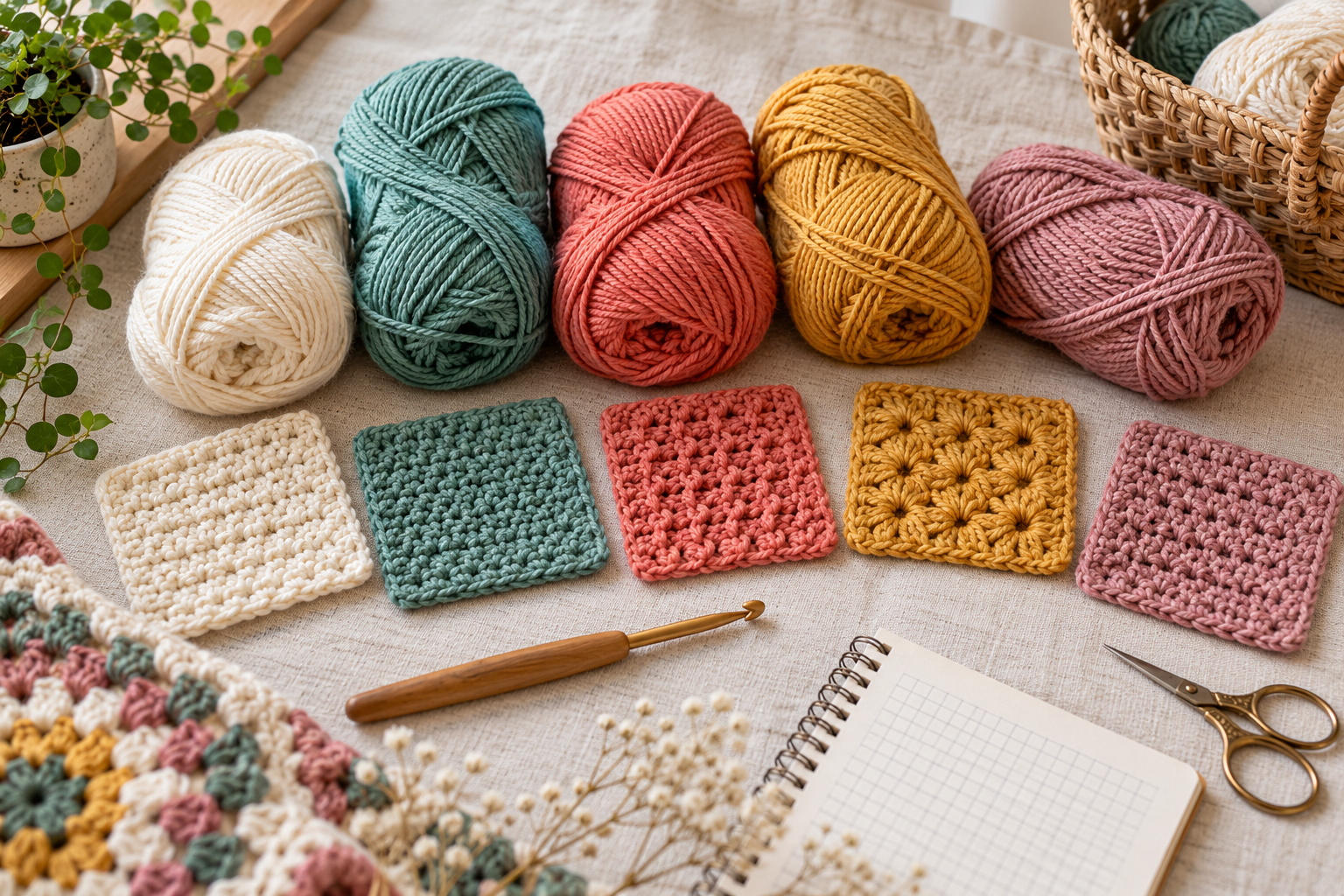
1. Understand yarn weight
Yarn weight describes thickness, not how heavy the finished project will be. Common categories range from very fine lace yarn to bulky and super-bulky yarn. Many beginner tutorials use medium or worsted-weight yarn because the stitches are large enough to see without taking too long to build fabric.
The label may show a category number, a descriptive name, or both. Use the weight requested by your pattern when possible. Swapping to a much thicker or thinner yarn can change the finished size, drape, and amount of yarn needed.
2. Choose a fibre for the job
Cotton
Cotton yarn usually has clear stitch definition and is useful for coasters, dishcloths, market bags, and warm-weather accessories. It can feel less elastic than wool, so beginners may need to relax their grip to avoid stiff fabric.
Wool and wool blends
Wool often has natural spring and warmth, making it useful for hats, scarves, and cosy garments. Check the care label: some wool yarns need gentle washing, and some people prefer a non-wool alternative for comfort or allergies.
Acrylic
Acrylic is widely available in many colours and is often machine washable, depending on the label. It can be a practical choice for practice swatches, blankets, and everyday projects. Different acrylic yarns vary in softness and how they behave after washing.
Blends and novelty yarns
Blends combine qualities from more than one fibre. Novelty yarns with long fuzz, loops, or metallic strands can be beautiful, but their texture may hide stitch tops. Save them for a project where the pattern suits the yarn, or practise with a smoother yarn first.
3. Match the hook to the yarn and the fabric
The yarn label usually suggests a hook size, and a pattern may specify a different size to achieve its intended gauge. The suggested size is a starting point, not a guarantee: two crocheters can make different-sized stitches with the same hook and yarn.
If your fabric feels rigid and the hook is difficult to insert, try a larger hook. If the stitches look very loose when the pattern calls for dense fabric, try a smaller hook. For amigurumi, designers often recommend a smaller hook than the yarn label suggests to help reduce gaps, but follow the pattern’s guidance.
4. Read the yarn label before buying
- Yarn weight or thickness category
- Recommended crochet hook size
- Length or yardage per ball
- Fibre content
- Care instructions and washing temperature
- Dye-lot or colour information when buying multiple balls
If your project needs more than one ball, check the dye-lot number when possible. Two balls with the same colour name can look slightly different if they come from different dye lots. Buy enough yarn for the project when practical, especially for garments and large blankets.
5. Make a small swatch before committing
Crochet a sample using the stitch pattern and hook you plan to use. If the pattern gives a gauge, measure the centre of your swatch and compare the stitch and row counts. If you have more stitches in the same width than the pattern, your stitches are smaller; try a larger hook. If you have fewer stitches, try a smaller hook.
For a small coaster, exact gauge may be less important than getting the desired size and a fabric that lies flat. For clothing, gauge matters much more because a small difference across a swatch can become a noticeable difference in the finished garment.
Quick yarn choices by project
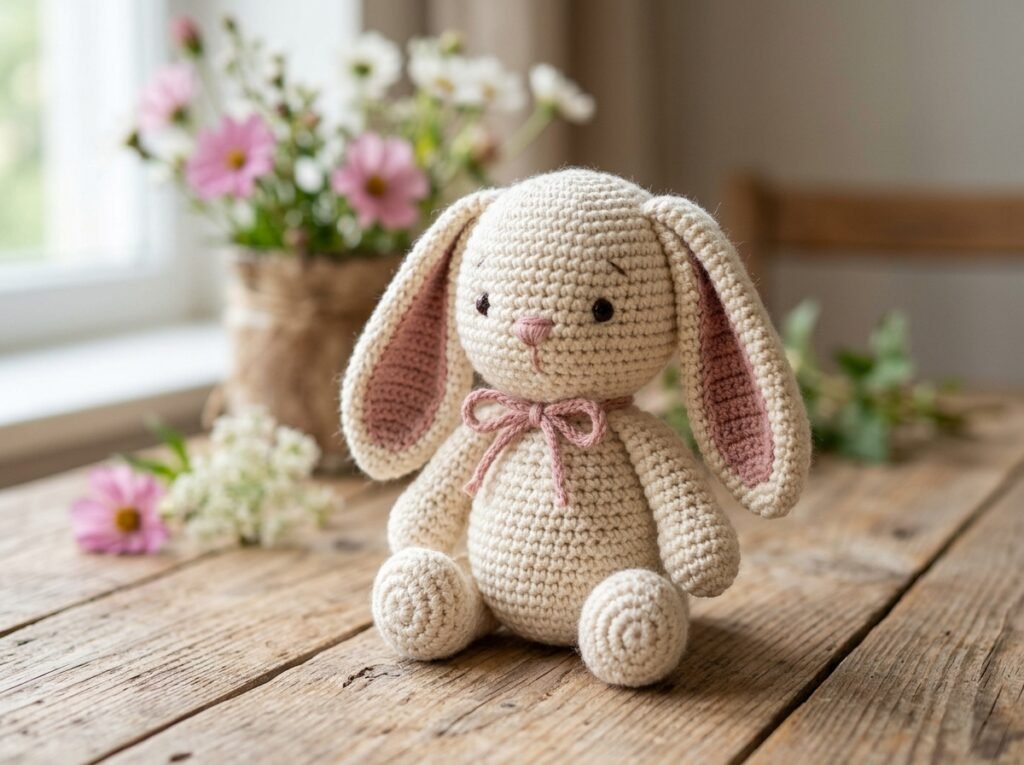
Dishcloth or coaster: smooth cotton is a practical starting point. Blanket: choose a comfortable fibre and check washability. Hat or scarf: a soft wool blend or acrylic may work well. Stuffed toy: choose yarn that shows stitches clearly and use the hook size recommended by the pattern. First practice swatch: smooth, light-coloured medium yarn is usually easiest to see.
Common yarn-shopping mistakes
- Choosing fuzzy yarn before learning to recognise stitches
- Ignoring the pattern’s suggested weight and gauge
- Buying too little yarn for a large project
- Assuming every fibre can be washed the same way
- Changing yarn weight and hook size at once, making results harder to compare
Frequently asked questions
What yarn is easiest for beginners?
Smooth, light-coloured medium-weight yarn is a forgiving choice for practice because the stitch structure is easy to see. Check the label for the hook range and choose yarn that feels comfortable in your hands.
Can I substitute a different yarn?
Often, but the finished size and texture may change. Match the original yarn’s weight and fibre behaviour as closely as possible, make a swatch, and check whether the pattern’s gauge still works.
Does a bigger hook always make a bigger project?
A larger hook usually makes larger, looser stitches with the same yarn, but the final dimensions also depend on stitch pattern, tension, and construction. Measure a swatch instead of relying on hook size alone.
Ready to practise? Browse the Crochet Tutorials & Guides and choose a small project from the free crochet pattern library.